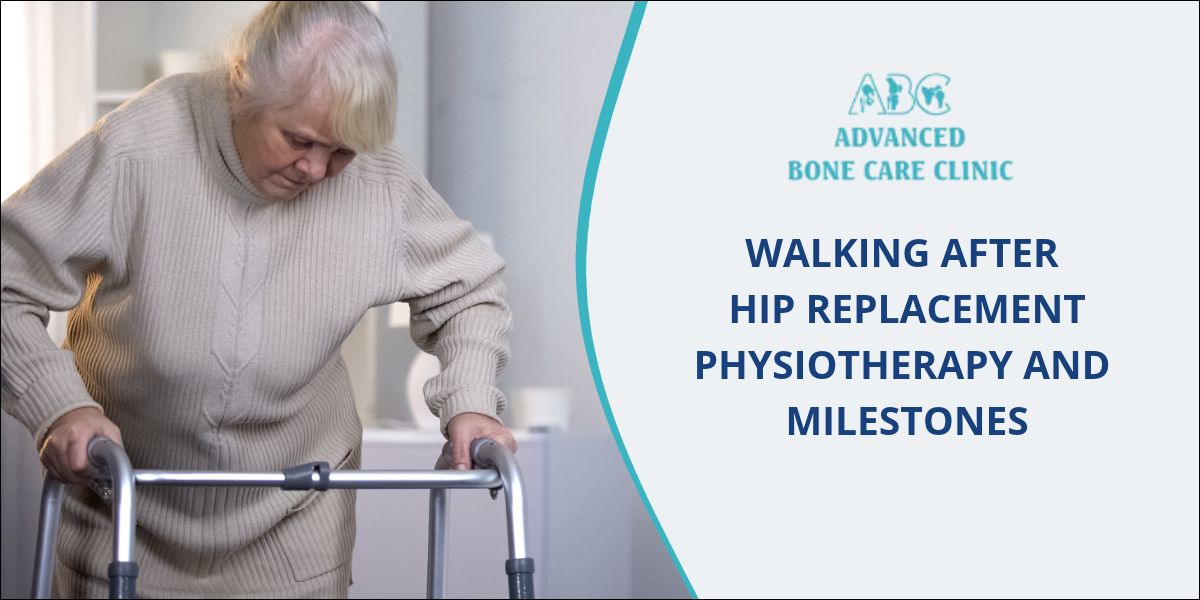
Walking after hip replacement usually begins within a day or two of surgery, first with a walker and the physiotherapist beside you. Over the following weeks, most people move to crutches or a cane, walk longer distances, climb stairs and return to everyday tasks. Physiotherapy is a central part of this process because it rebuilds strength, balance and confidence around the new joint. The pace is different for every person, so your surgeon and physiotherapist will set the plan for you.
This guide focuses on the practical side of recovery: how walking progresses, what physiotherapy involves, which everyday milestones to expect and when to call your surgeon. For a week-by-week overview and precautions, read our article on the hip replacement recovery timeline.
Why Walking and Physiotherapy Matter After Hip Replacement
Surgery replaces the damaged joint surfaces, but the muscles around the hip are weak after surgery and before it, since many people have avoided activity because of pain. Gentle, regular movement helps to:
- Improve blood flow in the legs, which supports circulation
- Rebuild the muscles that control the hip
- Restore a more even walking pattern
- Reduce stiffness and help you regain confidence
Doing too little can slow recovery, and doing too much too early can cause pain, swelling or strain. The aim is steady progress guided by your care team.
How Walking Usually Progresses
In the hospital
Many patients are helped to stand and take a few steps with a walker on the day of surgery or the next day. A physiotherapist teaches you how to stand up, transfer your weight, turn and sit safely. Your surgeon will tell you how much weight you can put on the operated leg.
First two weeks at home
You will usually walk short distances several times a day with a walker. Short, frequent walks are generally better than a few long ones. Keep your steps even, stand tall and look ahead rather than at your feet. Rest when you feel tired.
Weeks three to six
Many people increase their walking distance and may progress from a walker to crutches or a cane, if the physiotherapist and surgeon agree. Do not give up your walking aid sooner than advised, even if you feel steady, as a limp can develop if the muscles are not ready.
Weeks six to twelve and beyond
Many people walk with little or no support, but strength and stamina continue to improve for several months. Some people may still feel mild stiffness or tiredness after long walks. This is not unusual, but speak to your surgeon if the pain is increasing or limiting your activity.
What Physiotherapy Involves
Physiotherapy usually starts in the hospital and continues at home or in a clinic. Exact exercises depend on your surgical approach and your condition. Commonly used exercises include:
- Ankle pumps: Moving the feet up and down to support circulation.
- Quadriceps and gluteal squeezes: Tightening the thigh and buttock muscles for a few seconds and relaxing.
- Heel slides: Sliding the heel along the bed towards the buttock, within the limits given to you.
- Standing hip movements: Holding a support and lifting the leg gently to the side or back.
- Sit-to-stand practice: Standing up from a firm chair with controlled movements.
- Balance and gait training: Practising weight transfer and an even step length.
A physiotherapist will increase the number or difficulty of exercises slowly. Do them as taught and avoid forcing the hip beyond the limits you were given. Some soreness is common, but sharp pain or sudden swelling should be reported.
Everyday Milestones to Expect
These milestones are general guides and not deadlines.
Getting in and out of bed
In the first weeks you will learn to move in and out of bed with the operated leg supported. A firm mattress at a comfortable height can help.
Using the toilet and bathing
A raised toilet seat, grab bars and a non-slip mat can make these tasks safer. Ask when it is safe to shower and when to avoid soaking the wound.
Climbing stairs
Stairs are usually practised with a rail, using the stronger leg to go up and the operated leg to go down, unless your physiotherapist teaches a different method. Take one step at a time.
Dressing and footwear
Sock aids, long shoe horns and slip-on shoes can reduce the need to bend. Choose flat, supportive footwear with a non-slip sole.
Sleeping
Your surgeon will advise on positions and whether to use a pillow between the knees. Sleep may be disturbed at first, and it usually improves as pain settles.
Driving and travel
Many people can return to driving after a few weeks, once they are off strong pain medicines and can control the vehicle safely, but you must ask your surgeon before you start.
Returning to work and leisure
Desk work may be possible earlier than physically demanding work. Low-impact activities such as walking and swimming are often encouraged later, depending on your surgeon’s advice. Discuss sports and heavy activities before you restart them.
Safety Tips While You Recover
- Follow the hip precautions you were given, as they depend on the surgical approach. Our article on precautions after hip replacement explains the common ones.
- Remove loose rugs and cables, and keep floors dry and well lit.
- Use the walker or cane every time you are advised to, including at night.
- Sit on a firm chair with armrests and avoid low sofas or deep seats.
- Take medicines, including blood thinners if prescribed, exactly as advised.
- Attend all follow-up visits and X-rays as scheduled.
Warning Signs to Report
Contact your surgeon promptly, or go to an emergency department, if you notice:
- Fever, or increasing redness, swelling, warmth or discharge at the wound
- Sudden or severe hip pain, or a fall with pain afterwards
- A change in the shape or length of the leg, or inability to bear weight
- Calf pain, tenderness or swelling
- Sudden breathlessness or chest pain, which needs emergency care
Frequently Asked Questions
How soon can I walk after hip replacement?
Most patients are encouraged to stand and take a few steps with support within a day or two, depending on their health and the surgeon’s instructions.
How long will I need a walker or crutches?
Many people use a walker for the first weeks and then move to a cane or no aid. The time depends on strength, balance and your surgeon’s advice.
Is it normal to limp after hip replacement?
A limp can occur early in recovery because the muscles are weak. Physiotherapy and a gradual reduction of walking aids can help. If a limp persists or pain increases, tell your surgeon.
Is some pain and swelling normal while walking?
Mild pain and swelling are common, particularly after longer activity. Rest, elevation and prescribed medicines may help, but report sudden, severe or worsening symptoms.
How long does physiotherapy continue?
It often lasts for several weeks, and some people continue exercises for longer. Your physiotherapist will tell you how often to attend and when to continue at home.
When can I climb stairs, drive or return to work?
These milestones vary. Stairs are often practised in the first weeks with support, driving is usually allowed after your surgeon approves, and the return to work depends on your job. Ask your surgeon about each one.
Discuss Your Hip Concerns With Dr. Murtaza Adeeb
If you are planning a hip replacement or have questions about recovery, a consultation can help you understand your options. Dr. Murtaza Adeeb (MBBS, MRCS Ed., FRCS Eng., FRCS Ed. (Orth.), Dip. Sports & EM) is a Consultant Orthopaedic and Joint Replacement Surgeon in Pune. You can learn more on our page about hip replacement surgery in Pune, or read about conditions that may need hip replacement.
- Address: Dr. Murtaza Adeeb’s clinic, 8, Gopalanand Soc, Fatimanagar, Near Bank of Maharashtra, Wanowrie, Pune, Maharashtra, India
- Phone: +91 89830 73980
- Email: dr.m.adeeb@gmail.com
You can also send a message through the contact page.