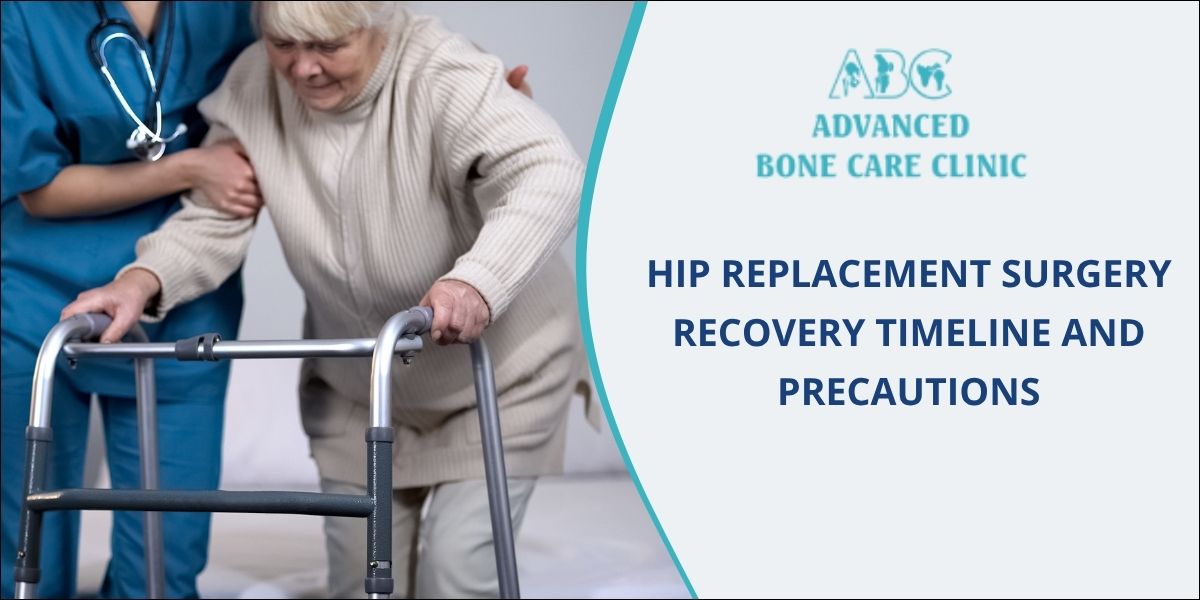
After hip replacement surgery, most people stand and walk with a walker within a day or two, return to many daily activities in about six to twelve weeks, and keep gaining strength for several months, with full recovery taking up to a year. Following hip precautions, doing your physiotherapy exercises and attending follow-up visits are the key steps that support a smooth recovery. Your own timeline depends on your health, age, the surgical approach and how the joint responds.
This guide walks through a typical recovery timeline, the precautions most surgeons advise and the warning signs that need medical attention.
What Happens in Hip Replacement Surgery?
In a total hip replacement, the damaged ball (head of the thigh bone) and socket (acetabulum) are replaced with artificial parts. The aim is to reduce pain and help restore movement in people whose hip has been damaged by arthritis, injury, avascular necrosis or other conditions. You can read about hip conditions that may need replacement surgery for more background.
Hip Replacement Recovery Timeline
The timeline below describes a general pattern. Your surgeon and physiotherapist will adjust it to your situation.
Day 0 to Day 3: In the hospital
- Pain relief, antibiotics and blood thinners as advised
- Getting out of bed and standing with a walker, often on the day of or day after surgery
- Breathing exercises and ankle pumps to support circulation
- Learning how to get in and out of bed, sit on a chair and use the toilet safely
Week 1 to Week 2: Early recovery at home
- Walking short distances several times a day with a walker
- Continuing home exercises taught by the physiotherapist
- Keeping the wound clean and dry until it is reviewed
- Using aids such as a raised toilet seat and a firm chair with armrests
Week 3 to Week 6: Building independence
- Gradually walking longer distances
- Moving from a walker to crutches or a cane, if your therapist agrees
- Climbing stairs carefully with support, starting with the correct leg as taught
- Light household tasks without bending low
Week 6 to Week 12: Returning to routine
- Many people walk without a support by this stage
- Return to office work or driving, if cleared by your surgeon
- Strengthening and balance exercises become more important
Three months to one year: Continued improvement
Muscle strength, walking stamina and confidence continue to improve. Low-impact activities such as walking, swimming and stationary cycling are usually encouraged. High-impact sports are generally discussed individually with your surgeon.
Precautions After Hip Replacement
Precautions help protect the new joint while the surrounding tissues heal. The exact list depends on the surgical approach, so always follow your own surgeon’s instructions. Commonly advised precautions include:
Movement precautions
- Do not bend the hip beyond 90 degrees, for example by sitting on very low chairs or leaning forward to pick things up
- Do not cross your legs at the knees or ankles
- Do not turn the operated leg inward or twist your body over a planted foot
- Sleep on your back or as advised, with a pillow between the knees if recommended
Home safety tips
- Remove loose rugs, wires and clutter to prevent falls
- Use a raised toilet seat, shower chair and grab bars where possible
- Keep daily items at waist height
- Use a long-handled reacher and sock aid for dressing
- Avoid sitting cross-legged or on the floor, and avoid Indian-style toilets in the early months
Our article on precautions after hip replacement surgery covers these points in more detail.
Exercises and Physiotherapy
Physiotherapy is a central part of recovery. Early exercises often include ankle pumps, thigh muscle tightening, heel slides and gentle hip movements within safe limits. Over time, the programme adds standing exercises, balance work and walking practice. Do the exercises regularly, but do not push into sharp pain. Report any new or worsening pain to your physiotherapist or surgeon.
Diet, Sleep and Pain Management
A balanced diet with enough protein, fruits, vegetables and fluids supports wound healing. If you have diabetes, keeping blood sugar under control is important. Take pain medicines as prescribed so you can move and exercise comfortably. Sleep may be disturbed in the first few weeks; this usually settles as healing progresses.
Warning Signs After Hip Replacement
Contact your surgeon promptly if you notice:
- Fever or chills
- Increasing redness, warmth, swelling or discharge from the wound
- Sudden severe hip pain, or the leg looking shorter or turned
- Pain, swelling or redness in the calf
- Breathlessness or chest pain, which needs emergency care
Frequently Asked Questions
How long does it take to recover from hip replacement surgery?
Many people walk with support within a day or two, manage most daily activities by about six to twelve weeks, and continue to improve strength and stamina for several months. Full recovery can take up to a year. The exact timeline depends on your health, age and rehabilitation.
When can I walk normally after hip replacement?
Most people use a walker or crutches for the first few weeks, then move to a cane. Walking without support usually becomes possible over six to twelve weeks, once your surgeon and physiotherapist are satisfied with your balance and strength.
What movements should I avoid after hip replacement?
The movements to avoid depend on the surgical approach. Commonly advised precautions include not bending the hip beyond 90 degrees, not crossing your legs and not twisting the operated leg inward. Your surgeon will tell you which precautions apply to you and for how long.
When can I drive after hip replacement surgery?
Many people return to driving around four to six weeks after surgery, once they are off strong pain medicines and can move the leg safely and quickly. Check with your surgeon before you drive.
Can I sit cross-legged or on the floor after hip replacement?
Sitting cross-legged, squatting and sitting on the floor put the hip in deep bending positions. These are usually avoided, especially in the early months. Discuss long-term limits with your surgeon, as advice depends on your implant and approach.
What are signs of a problem after hip replacement?
Contact your doctor promptly if you notice fever, increasing redness, swelling or discharge at the wound, new or severe hip pain, a change in leg length or shape, calf pain or swelling, or sudden breathlessness or chest pain.
Discuss Your Hip Concerns With Dr. Murtaza Adeeb
If you are considering hip replacement or have questions about recovery, a consultation can help you understand your options and plan each stage. Dr. Murtaza Adeeb (MBBS, MRCS Ed., FRCS Eng., FRCS Ed. (Orth.), Dip. Sports & EM) is a Consultant Orthopaedic and Joint Replacement Surgeon in Pune. Learn more about hip replacement surgery in Pune or read his profile.
You can also send a message through the contact page.