Knee pain and injuries can significantly impact your quality of life, making even simple activities difficult. When conservative treatments like medication, physiotherapy, or lifestyle changes aren’t enough, knee surgery may be recommended. But what are the different types of knee surgery available?
As a knee surgeon in Pune, Maharashtra with years of experience, Dr. Murtaza Adeeb believes that informed patients make better decisions about their health. This guide will walk you through the most common surgical options to help you understand what might be best for your condition.
1. Knee Arthroscopy: The Minimally Invasive Approach
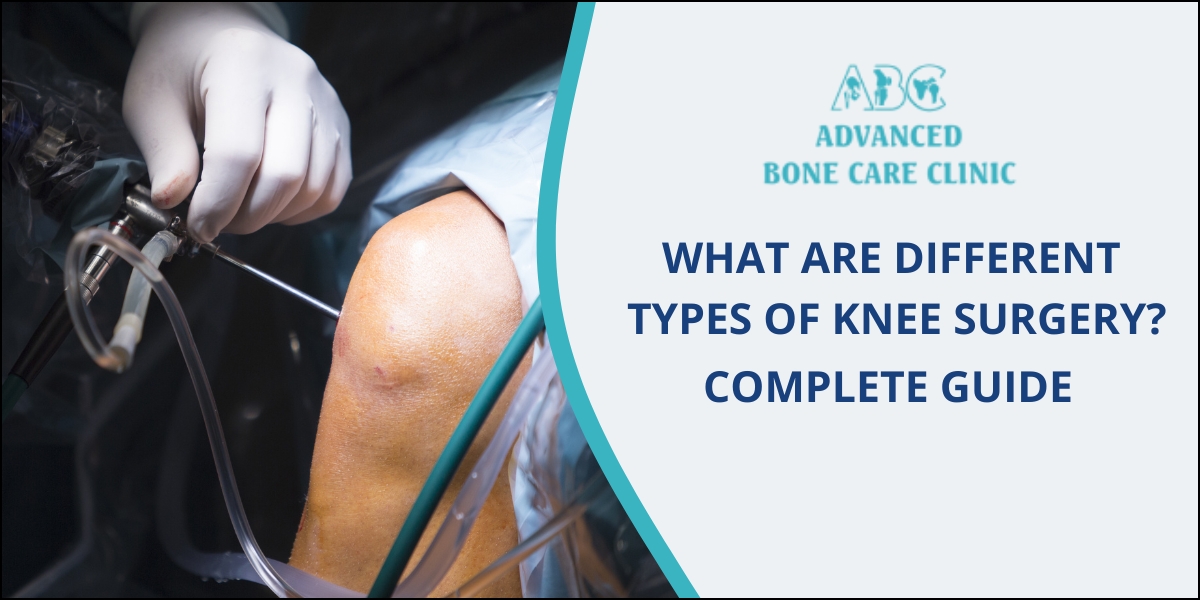
Knee arthroscopy is a common, minimally invasive procedure used to diagnose and treat problems inside the knee joint. Using a small camera (arthroscope) inserted through tiny incisions, a knee surgeon can:
- Repair or remove torn meniscus (cartilage)
- Reconstruct torn ligaments (like the ACL)
- Remove loose bone or cartilage fragments
- Treat inflammation in the lining of the joint
This surgery offers quicker recovery times and less scarring compared to open surgery.
2. ACL Reconstruction: Restoring Stability
The anterior cruciate ligament (ACL) is crucial for knee stability, especially in athletes. A torn ACL often requires surgical reconstruction. During this procedure, a knee surgery doctor replaces the torn ligament with a graft from your own tissue or a donor.
This surgery is vital for individuals wishing to return to high-demand sports or physically demanding jobs.
3. Total Knee Replacement (Arthroplasty)
For patients with severe osteoarthritis or significant joint damage, a total knee replacement may be the best solution. This procedure involves removing damaged bone and cartilage from the thigh bone, shin bone, and kneecap, and replacing them with an artificial joint (prosthesis).
4. Partial Knee Replacement (Unicompartmental Knee Replacement)
When arthritis is confined to one part of the knee, a partial knee replacement may be suitable. This surgery replaces only the damaged compartment, preserving healthy bone and tissue. It often leads to a quicker recovery and more natural knee movement compared to a total replacement.
5. Meniscus Repair or Transplant
The meniscus acts as a shock absorber in the knee. If torn, it can cause pain, swelling, and stiffness. Depending on the tear’s location and severity, a knee surgeon may either repair the meniscus or, in cases of severe damage, perform a meniscus transplant using donor tissue to restore cushioning and function.
6. Patellofemoral (Kneecap) Replacement
This procedure focuses on replacing only the underside of the kneecap and the trochlear groove (the groove at the end of the thigh bone) when arthritis is isolated to this area. It’s an excellent option for younger, active patients with localized damage.
7. Osteotomy: Realigning the Knee
In younger patients with early-stage arthritis on one side of the knee, an osteotomy may be recommended. This surgery involves cutting and reshaping the bone to shift weight away from the damaged area. It can delay the need for a knee replacement by many years.
8. Cartilage Restoration Procedures
For younger patients with isolated cartilage damage, procedures like:
- Microfracture: Stimulating new cartilage growth
- Autologous Chondrocyte Implantation (ACI): Transplanting healthy cartilage cells
- Osteochondral Autograft Transfer: Moving healthy cartilage from one area to another
These techniques aim to repair cartilage defects and prevent early arthritis.
Why Choose Dr. Murtaza Adeeb for Knee Surgery in Pune?
Choosing the right knee surgeon in Pune is critical for a successful outcome. Dr. Murtaza Adeeb combines extensive surgical expertise with a patient-centered approach. He ensures every patient receives a personalized treatment plan, using the latest techniques and technology to achieve the best possible results.
As a dedicated knee surgery doctor in Pune, Dr. Adeeb is committed to guiding you through every step—from diagnosis to post-operative rehabilitation—helping you return to a pain-free, active life. If you’re experiencing persistent knee pain or have been advised to consider surgery, don’t wait. Reach out to Dr. Murtaza Adeeb, a renowned knee surgeon in Pune, for a comprehensive evaluation and a tailored treatment plan.
Visit : Dr. Murtaza Adeeb
Address : Shop No 8, Gopalanand Society, ABC Clinic, Wanawadi Rd, Fatima Nagar, Pune
Contact Number : +91 8983073980
FAQs on Knee Surgery
1. What is the most common knee surgery?
The most common knee surgery is arthroscopic meniscus surgery, where torn cartilage is repaired or trimmed using a minimally invasive technique.
2. How long does recovery from knee replacement take?
Initial recovery takes about 6–12 weeks, but full recovery and return to all activities can take 6 months to a year, depending on the individual and the type of replacement.
3. When is ACL surgery necessary?
ACL surgery is usually recommended for active individuals, especially athletes, who have a complete tear and want to return to sports or activities that involve pivoting, jumping, or sudden direction changes.
4. Can you walk with a torn meniscus?
Yes, you can often walk with a torn meniscus, but it may cause pain, swelling, locking, or a feeling of instability. Surgery may be needed if symptoms don’t improve with rest and therapy.
5. What is the alternative to knee replacement surgery?
Alternatives include knee osteotomy (bone realignment), arthroscopy (for cleaning or repairing tissue), injections (like cortisone or hyaluronic acid), and physiotherapy. The best option depends on your specific condition and age.